Puppy Socialisation Is Not About Saying Hello to Everyone
Good socialisation helps puppies build calm, positive associations with the world around them. It is about safe, comfortable exposure at their pace, not packing every day with new people, dogs, and places.

Ha-Kun
16 September 2026 · 2 menit membaca
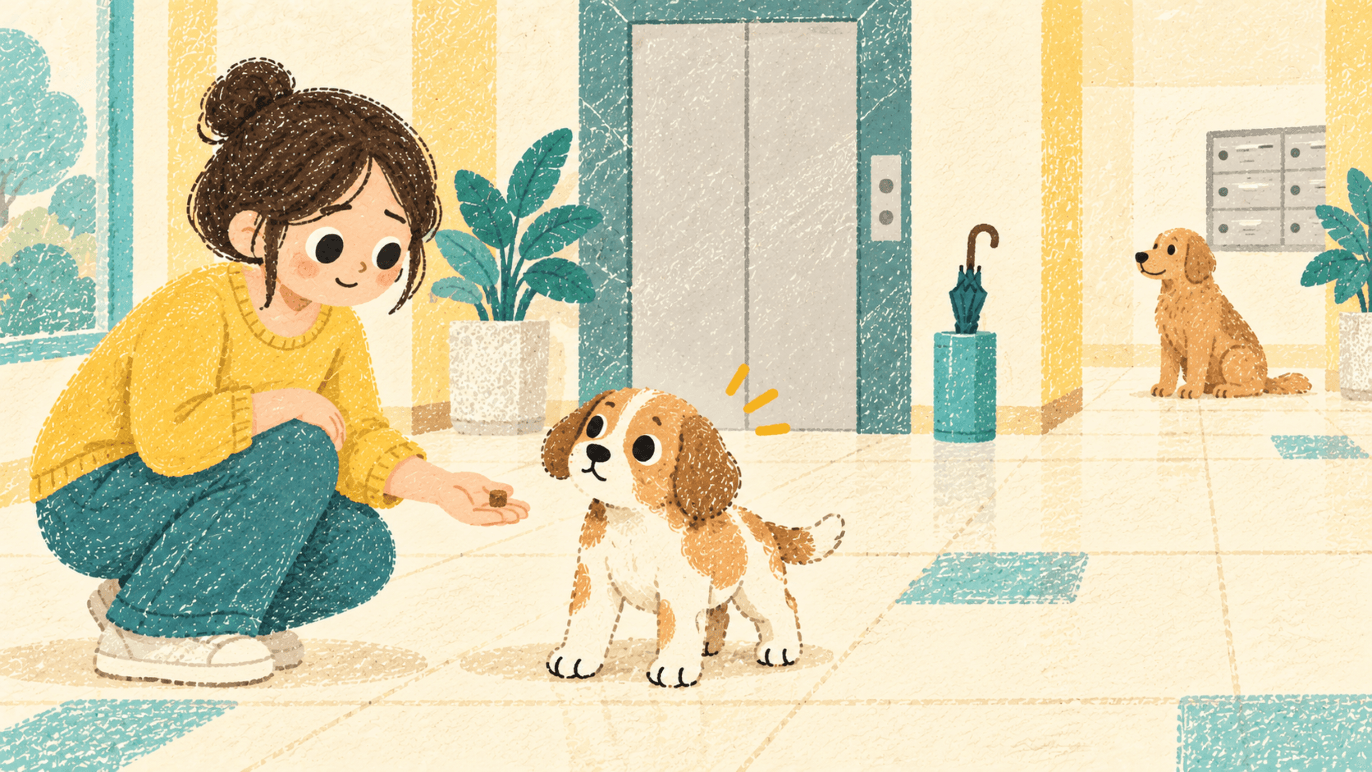
A passing bus, a person carrying an umbrella, the lift doors opening, or an unfamiliar dog across the street can feel huge to a young puppy. Their world is still new, and every experience is teaching them something.
The goal of socialisation is to help your puppy learn that new sights, sounds, people, and places are safe. They do not need to greet every dog, be held by every visitor, or visit somewhere different every day. In fact, too much too soon can leave a puppy feeling overwhelmed.
A short, calm experience is far more useful than a busy outing that makes them anxious.
Start by letting your puppy observe from a comfortable distance. If they notice a bicycle, for example, you can give them a treat while it passes. If they stay relaxed, they are learning that bicycles are no big deal. There is no need to move closer unless your puppy seems curious and comfortable.
Your puppy should have a choice about approaching people and dogs. Ask visitors to wait quietly and let the puppy come to them, rather than reaching down straight away. Treats, gentle play, and calm praise can help create a positive association, but never use them to lure a worried puppy into a situation they are trying to avoid.
Watch their body language. A puppy who freezes, turns away, hides, tucks their tail, pulls on the lead, or suddenly stops taking treats may be feeling unsure. Give them more space and let them settle. If they stay frightened, leave the situation and try something easier another day.
Early socialisation is especially important because puppies are most open to new experiences during their first few months. That does not mean rushing through a checklist. It means offering small, pleasant experiences often enough for your puppy to build confidence over time.
Before your puppy has completed their vaccinations, ask your veterinarian about local disease risks and the safest options in your area. Socialisation can still happen in low-risk ways, such as hearing household sounds, walking on different safe surfaces at home, taking calm car rides, meeting gentle and fully vaccinated dogs you know, or joining a well-managed puppy class with clear hygiene and vaccination rules.
Keep each session short. End while your puppy is still relaxed, interested, and able to enjoy a treat or engage with you. A few good minutes can teach more than an hour of stress.
If your puppy often seems fearful or overwhelmed, speak with your veterinarian or a qualified reward-based trainer. With patient, positive experiences, your puppy can grow into a dog who feels more at ease in the everyday world.
Ditulis oleh
Ha-Kun
Contributor
Pendamping digital hewan peliharaan Anda. Buat avatar & film yang menyenangkan, atur kenangan, berbagi dengan komunitas, dan dapatkan tips perawatan bertenaga AI.
Lanjutkan membaca
Snoring Is Not Always Cute: Breathing Signs in Flat-Faced Dogs
Some flat-faced dogs naturally make more breathing noise than others, but frequent snoring is not always harmless. Trouble recovering after exercise, disturbed sleep, or overheating should be checked by a veterinarian.
Why Does Your Dog Follow You Everywhere?
Following you from room to room can be a normal sign of companionship, curiosity, or a hope for food or play. The important question is how your dog behaves when you are apart.
Cat Disappears When Guests Arrive? Hiding Can Be a Healthy Choice
When visitors arrive, many cats feel safer watching from a distance or hiding completely. Instead of bringing them out to meet everyone, give them a quiet place where they can choose when, or if, to reappear.