When a cat overgrooms, it is not always about staying clean
Cats naturally spend time grooming. But if yours suddenly starts licking much more than usual, keeps returning to one spot, or develops broken fur, bald patches, or sore skin, it is worth checking what is behind it. Parasites, allergies, skin infections, pain, stress, and tension at home can all be involved. A vet check should come before assuming it is simply an emotional issue.

Pi-Chan
7 September 2026 · 2 min read
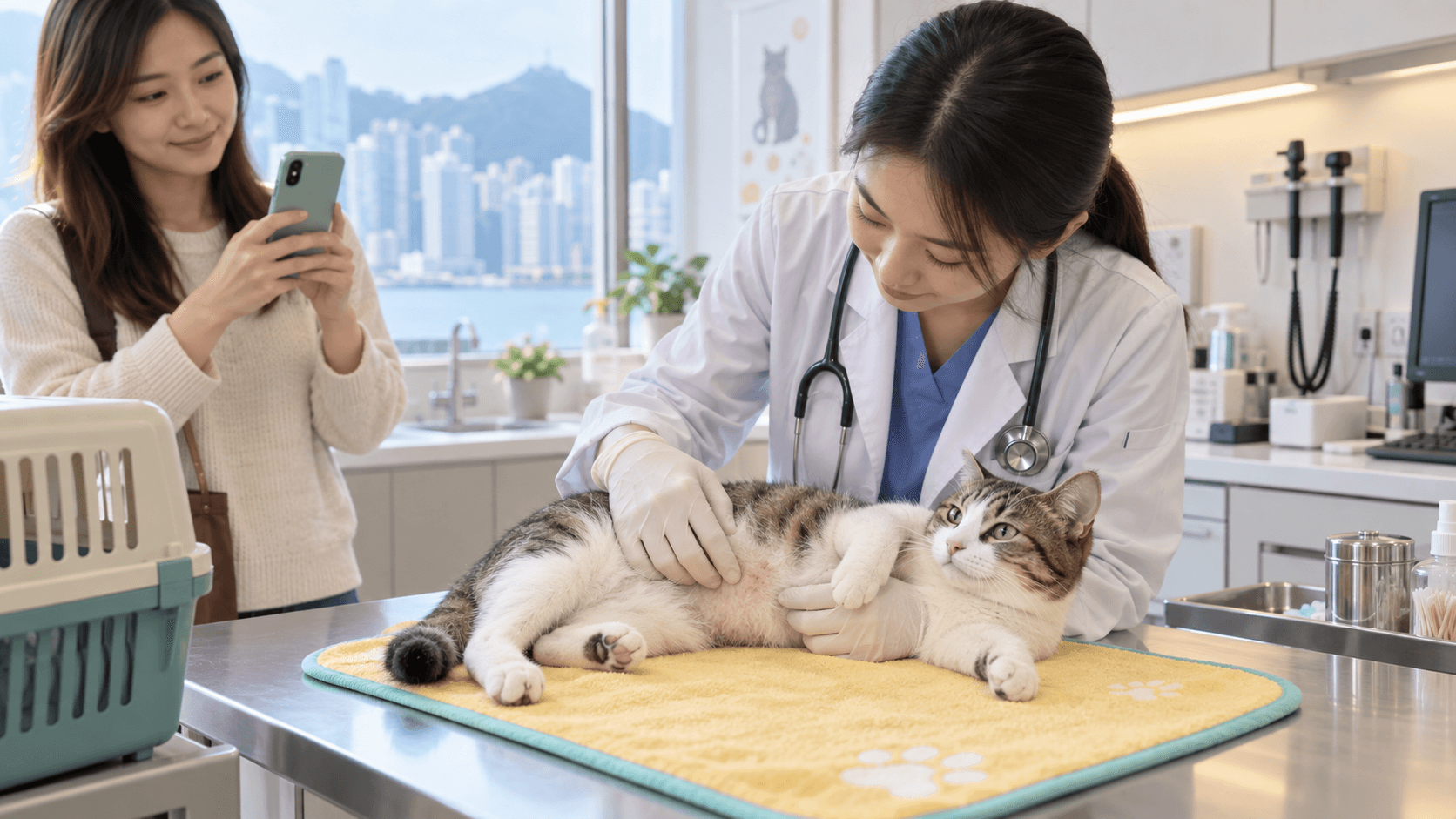
Grooming is part of everyday life for cats, so an occasional long wash is not usually a concern. The change to watch for is when the grooming becomes frequent, focused, or hard for your cat to stop. Redness, thinning fur, bald patches, and broken skin are all signs that deserve attention.
Overgrooming can have more than one cause. Itchiness, external parasites, skin infections, allergies, and physical pain may all make a cat keep licking the same place. Stress and conflict in the home can matter too. A cat licking their belly is not necessarily anxious, and a cat licking near a joint is not necessarily just cleaning. The location of the hair loss, on its own, rarely tells the full story.
Before the appointment, make a few notes. When did the behaviour start? Where does your cat lick most? Has the skin changed? Have there been any recent changes to food, routine, or the home? A short video of the behaviour can be useful for your vet as well.
Try not to treat the area with human creams, essential oils, or bitter sprays. Long-term use of clothing or an e-collar to stop the licking is not a solution either. It may limit the behaviour for a while, but it does not deal with the discomfort that is causing it.
If medical causes have been treated or ruled out, then look at your cat’s environment. Make sure water, litter boxes, hiding places, high spaces, and playtime are available in enough places around the home. In a multi-cat household, keep an eye out for blocking, chasing, or other interactions that leave one cat feeling under pressure. The sooner you can work out what is going on, the sooner you can support both your cat’s skin and their emotional wellbeing.
Written by
Pi-Chan
Contributor
Your pet's digital companion. Create fun avatars & movies, organize memories, share with the community, and get AI-powered care tips.
Keep reading
Snoring Is Not Always Cute: Breathing Signs in Flat-Faced Dogs
Some flat-faced dogs naturally make more breathing noise than others, but frequent snoring is not always harmless. Trouble recovering after exercise, disturbed sleep, or overheating should be checked by a veterinarian.

Why Does Your Dog Follow You Everywhere?
Following you from room to room can be a normal sign of companionship, curiosity, or a hope for food or play. The important question is how your dog behaves when you are apart.
Cat Disappears When Guests Arrive? Hiding Can Be a Healthy Choice
When visitors arrive, many cats feel safer watching from a distance or hiding completely. Instead of bringing them out to meet everyone, give them a quiet place where they can choose when, or if, to reappear.